
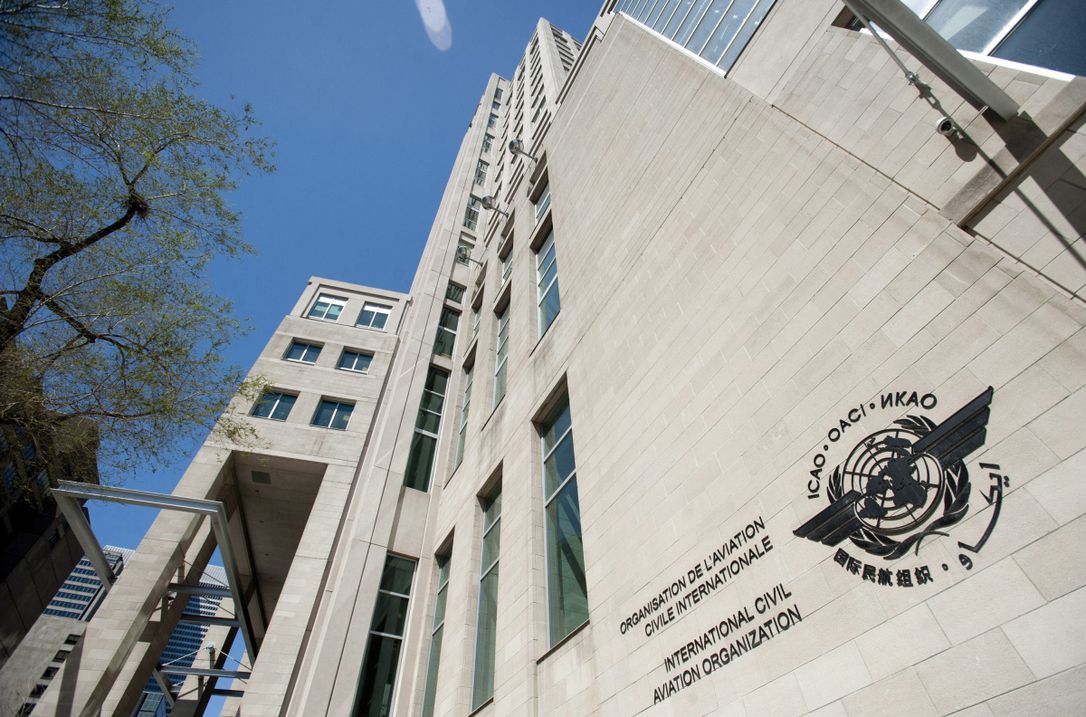
1.- Beyond the impact of COVID-19, what were the major challenges you faced during your term?
A former ICAO Director told me once: “Mr President, you have done many things in ICAO for the first time”.
In essence, I have faced situations never faced before. They required strong determination and, sometimes, an innovative approach. For example, with the emerging of COVID-19, the Council continued working virtually in six languages, even before we had a technological platform. I also had to lead the Council to take the first decision ever in 80 years on the merit of a dispute between its Members. I also lead the Council to take decisions on violations of the Chicago Convention, remaining focused on technical dimensions and not on any political aspect.
2.- What key achievements are you most proud of from your time in office?
There are many, but probably the most important achievement is the fact that the Council helped the Organization to deliver better thanks to a modernization process..
In my presentation as Presidential candidate in October 2019, while mentioning the main challenges that ICAO had to face in the future in the different domains of the Strategic Objectives, starting from the fast-paced evolution of the aviation industry, I underlined that to be successful in addressing these challenges ICAO had to adapt, modernize, and evolve. Accordingly, I proposed what I called an “agenda for modernization” with key points that would characterize my presidency if elected. Namely, an enhanced internal working environment, better cooperation between the Council and the Secretary General, better internal communication, more transparency, elimination of grey areas regarding competences of the Council and of the Secretary General, enhancement of the working methods of the Council, to focus more on innovation and relations with industry; and enhancement of the No Country Left Behind initiative with its incorporation amongst the six ICAO Strategic Goals.
The Agenda for Modernization finds continuity in the Transformational Objective, a great initiative promoted by the Secretary General, and immediately supported by the Council.
3.- How do you envision the air transport industry evolving over the next 10 years?
ICAO forecasts indicate that air transport will continue to grow at a substantial rate, reaching 12.4 billion passengers by 2050. Some regions, such as the Asia-Pacific Region and the Middle-East Region, will grow more than others. At the same time, I hope to see increased traffic growthin Africa thanks to the current positive signs emerging from the implementation of the Single African Air Transport Market.
Difficult to say how the industry itself will evolve. New markets will offer new opportunities. Maybe Low Cost carrier in Africa.
4.- Any specific moves in this direction?
I don’t see a revolution in the air transport market in terms of business models.
The air transport industry will have to continue the decarbonization process. Five percent less CO2 emissions by 2030 thanks to the uptake of SAF, and net zero by 2050 are challenges for the air transport industry that will accompany its development.
5.- Are you optimistic about the future of aviation?
I am definitively optimistic. Governments acknowledge much more widely than in the past that air transport is a crucial enabler of socio-economic development of their State. They focus more on investments in air transport and are more committed to enhancing the implementation of safety and security standards and practices.
6.- In your view, is the aviation industry in a stronger position today compared to six years ago?
I don’t know if it is stronger. For sure, it has shown to be resilient given that air transport has faced the most dramatic crisis ever, returning to pre-COVID-19 passengers traffic levels and achieving good profitability.
7.- The IAF recently launched the “Aviation4All” Declaration, which received broad support at the ICAO Assembly. What are your thoughts on this initiative?
It is an excellent initiative demonstrating in particular how ICAO is also changing its approach vis-à-vis non-regulator or non-governmental actors.
I hope that IAF will continue in this endeavour uniting the air transport industry if not towards a single voice, towards a well coordinated and uniform voice.
8.- What message would you like to share with the global aviation community?
You used exactly an expression that I use frequently: “global aviation community”. In fact, aviation is one of the economic sectors where the sense of community is very present, where there is more cooperation among the different stakeholders, be they regulators or industry, airlines or airports. My message is that this is a strength that must be preserved.