
Source: ACI-LAC
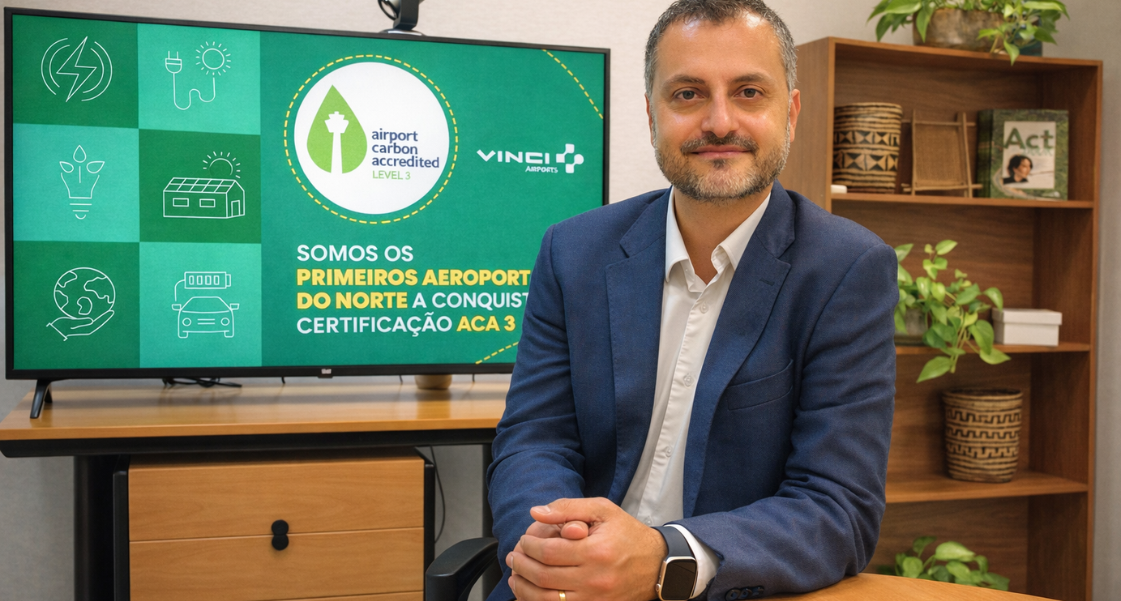
- ACI-LAC announces that Tabatinga, Tefé, and Cruzeiro do Sul airports have achieved Level 1 Airport Carbon Accreditation, highlighting their commitment to carbon emissions management.
Airports Council International Latin America and the Caribbean (ACI-LAC) celebrates the recent progress in carbon management practices by the Concessionaire of Amazonia Airports, part of the Vinci Airports network and member of ACI-LAC.
Tabatinga Airport and Tefé Airport, both in Amazonas, as well as Cruzeiro do Sul Airport, in Acre, have just received Level 1 certification under the ACI Airport Carbon Accreditation program, demonstrating their commitment to measuring and managing carbon emissions.
Meanwhile, Manaus (AM), Porto Velho (RO), Boa Vista (RR), and Rio Branco (AC) airports have reached Level 3 certification. This achievement means that, in addition to maintaining an emissions inventory, these airports have implemented structured carbon management practices, including a low-emissions policy, reduction targets, monitoring of energy and fuel consumption, analysis of emissions from investments, internal training, audits, communication of results, and active engagement with stakeholders such as airlines, service providers, and other operators.
Kleyton Mendes, CEO of the Concessionaire of Amazon Airports, stated: “This certification is a recognition of our commitment to global best practices in sustainability. More than an operational result, this milestone strengthens collaboration with airlines, service providers, and the community, reaffirming our ongoing commitment to decarbonization and to building a more responsible aviation industry and a healthier future.”
Rafael Echevarne, Director General of ACI-LAC, emphasized the importance of these achievements for the airport sector: “It is a great satisfaction for ACI-LAC to see the airports of the Concessionaire of Amazon Airports reach new levels in the Airport Carbon Accreditation program. The entry of Tabatinga, Cruzeiro do Sul, and Tefé at Level 1, together with the remarkable progress of Manaus, Porto Velho, Boa Vista, and Rio Branco to Level 3, demonstrates not only commitment but true leadership by Vinci Airports Brazil in sustainability. These achievements reflect the efforts of our partners to transform Brazilian aviation into a global benchmark in environmental management and in the fight against climate change.”
About ACI Airport Carbon Accreditation
Airport Carbon Accreditation (ACA) is the only global carbon management certification program for airports. It independently assesses and recognizes airports’ efforts to manage and reduce carbon emissions across six levels of certification:
- Level 1: Mapping the airport’s carbon footprint, identifying sources, and calculating annual emissions.
- Level 2: Demonstrating emissions reduction with evidence of procedures and compliance with carbon management targets.
- Level 3: Expanding the scope of emissions reduction and involving third parties in the process.
- Level 3+: Meeting previous requirements and offsetting remaining emissions with carbon credits.
- Level 4: Defining a long-term carbon management strategy aimed at absolute emissions reduction.
- Level 4+: In addition to previous steps, offsetting residual carbon emissions under the airport’s control.
- Level 5: The highest level, where the airport not only fulfills all previous steps but also ensures its entire ecosystem is aligned with the sector’s Net Zero commitment.
Currently, 645 airports worldwide are part of the Airport Carbon Accreditation program. In Latin America and the Caribbean, 121 airports are certified. In Brazil, 37 airports hold certification, including Salvador Bahia Airport, operated by Vinci Airports, which is the only airport in the Americas to have reached Level 5 of ACA—the highest global standard for airport decarbonization.